Design
The first and important parameter to be taken into account during acoustic design is the area of the potential assembly hall. When it is small, there is no need. The second significant factor is the number of viewers. A large number of visitors will distort natural vibrations, prevent echoes from forming, and create other interference that distorts the sound.
1. Determine system requirements: Before starting the design, it is necessary to determine the system requirements. This may include power, frequency range, number of channels, etc.
2. Selection of components: After determining the requirements, the components of the system must be selected. These could be amplifiers, speakers, mixing consoles, cables, etc. It is important to select components that meet your requirements and provide the best sound quality.
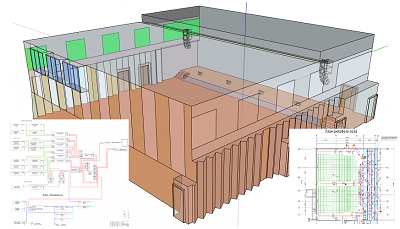
3. Circuit Design: At this stage, it is necessary to develop a circuit diagram of the system, which will include all the components and their connections. The design must be logical and efficient to ensure the best sound quality.
4. System Testing: Once the circuit has been designed, the system must be tested to ensure its functionality. This may include checking all components and connections, as well as testing the sound at different power levels.
5. System Setup: After successfully testing the system, you need to tune it for the best sound quality. This may include adjusting volume levels, channel balance, phase correction, etc.
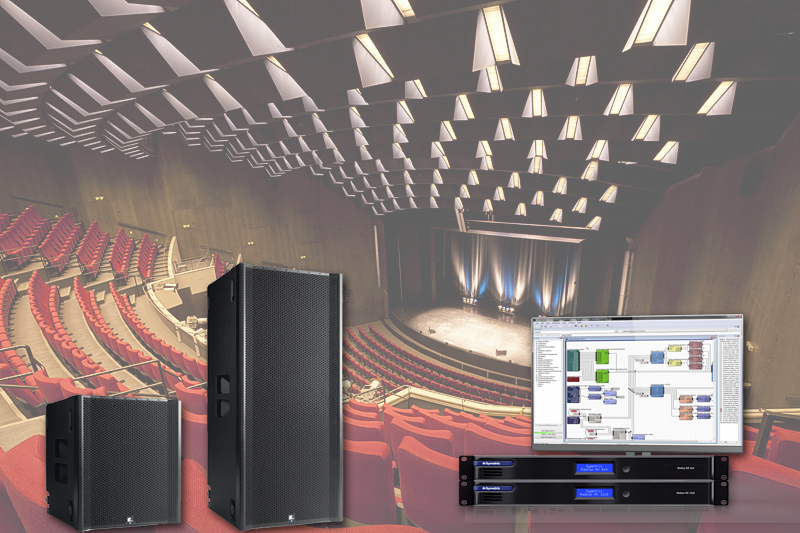
Design of sound reinforcement systems for any objects: assembly halls, theaters, recreation centers, concert venues.
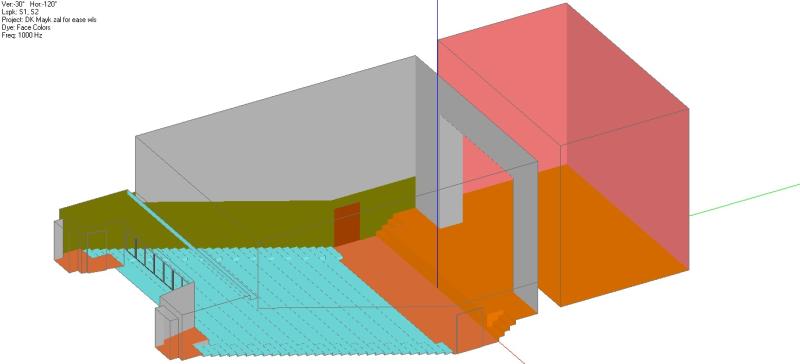
We do the design together with acoustic calculations, which is required for examination and verification of the correct placement of acoustic systems.
- we develop stage “P” and “RD” projects for MGE and DONM, taking into account all requirements;
- we develop projects of SOUE
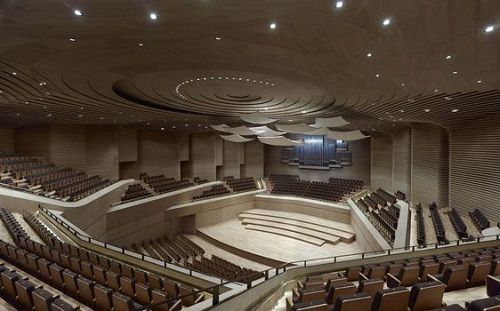
Following instructions and standards is necessary during reconstruction, construction, and repair work within cultural and entertainment facilities of any type. Particular attention is paid to the issues of vibration and sound insulation, the formation of the necessary acoustic environment in the premises. Therefore, the design of concert halls is carried out only by specialists; many requirements are determined by the customer, others are strictly regulated.
If possible, all parameters of the premises and materials used are taken into account. The current DBN contains all the requirements for the parameters of halls and the acoustic environment, taking into account their purpose (multifunctional, opera, drama, and so on).
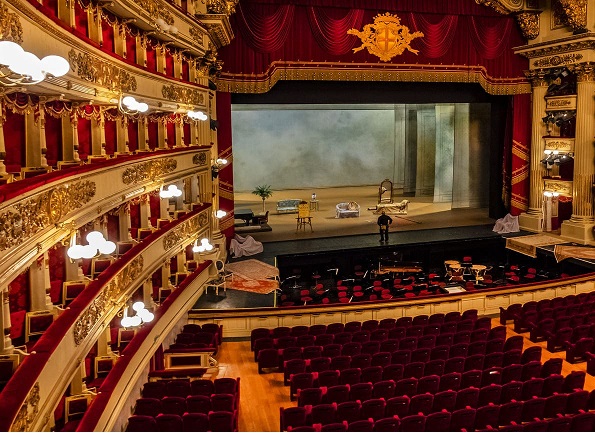
Theater design is very important for the correct presentation of expressiveness of staged plays, musical performances, all kinds of lectures and performances. While some shapes are better suited to certain types of performance, there is no ideal size or shape for a theater. The choice of the best form and scale depends on the direct functional purpose, the size of the required production and the number of audiences placed in the hall.
The acoustic calculation service is an opportunity to achieve ideal sound in any room and outdoor area, with minimal investment in finishing, and with the correct selection of acoustic systems and their placement.
Sound reinforcement is also required in assembly halls of schools and other educational institutions. For comfortable perception of the sound signal, it is necessary to carry out an acoustic calculation of the room, with the selection of acoustic materials to optimize the reverberation time, and the selection of loudspeakers.